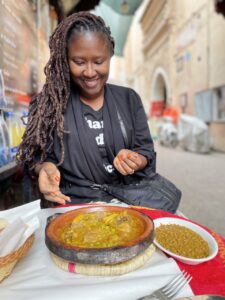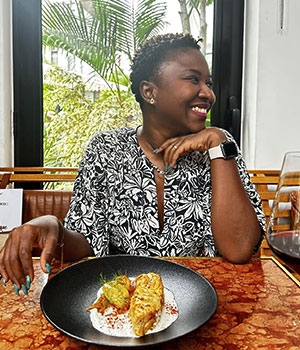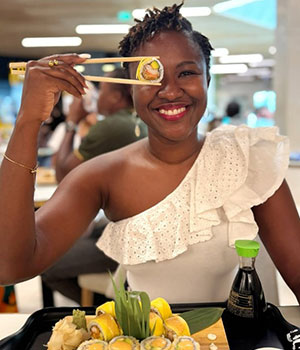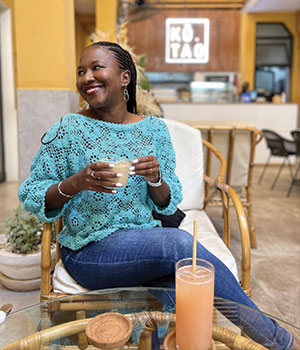



If you’re new here, hello! My name is Yasmine — founder of Afrofoodie, culinary storyteller, and explorer of African gastronomy. I hold a degree in international tourism and specialize in food tourism, but beyond the titles, my mission is simple: to shift the African narrative through food.
Wherever I go, I seek to understand places through their flavors — because food, to me, is the most beautiful language a culture speaks. It tells stories of people, traditions, and identity.
So when I found myself in Marrakech, I knew my discovery of the city had to begin at the table — or better yet, in the streets. We booked a street food tour with Moroccan Food Adventures, co-founded by the inspiring MarocMama and her husband. Their company curates experiences that let you taste Morocco bite by bite, from Marrakech to Essaouira.
I had heard of MarocMama while living in the UK, thanks to my dear friends Eulanda & Omo — you know how it goes, a friend of my friends is my friend. (Okay, maybe I made that one up 😉) But truly, supporting another woman entrepreneur doing incredible work in the culinary tourism space felt natural — almost necessary.
And what a great experience it was !
Our three-hour food tour turned out to be the highlight of our stay in Marrakech. After just two days in Morocco, I was ready to go beyond the classics — tagine and couscous — to discover what Moroccans eat in their everyday lives. Thanks to this tour, made up of eight delicious stops, I got to taste dishes and stories I would never have encountered on my own.
Our guide, Abdul, was a gem — knowledgeable, funny, and patient with our endless questions. Through his stories, I didn’t just taste Moroccan cuisine, I felt its rhythm, its generosity, its spice.
Let’s follow the guide, shall we?
First Stop: Tangia & Mechoui in the Mechoui Alley
After meeting our guide and the rest of the group in front of the post office at Jemaa El-Fna, we walked towards our first stop — the famous Mechoui Alley.
Can I admit something? This was hands down my favorite stop. It was love at first bite!
Even before tasting anything, I could feel it — the smoky aroma of roasted lamb filling the air. I just knew right away I was about to experience something special.
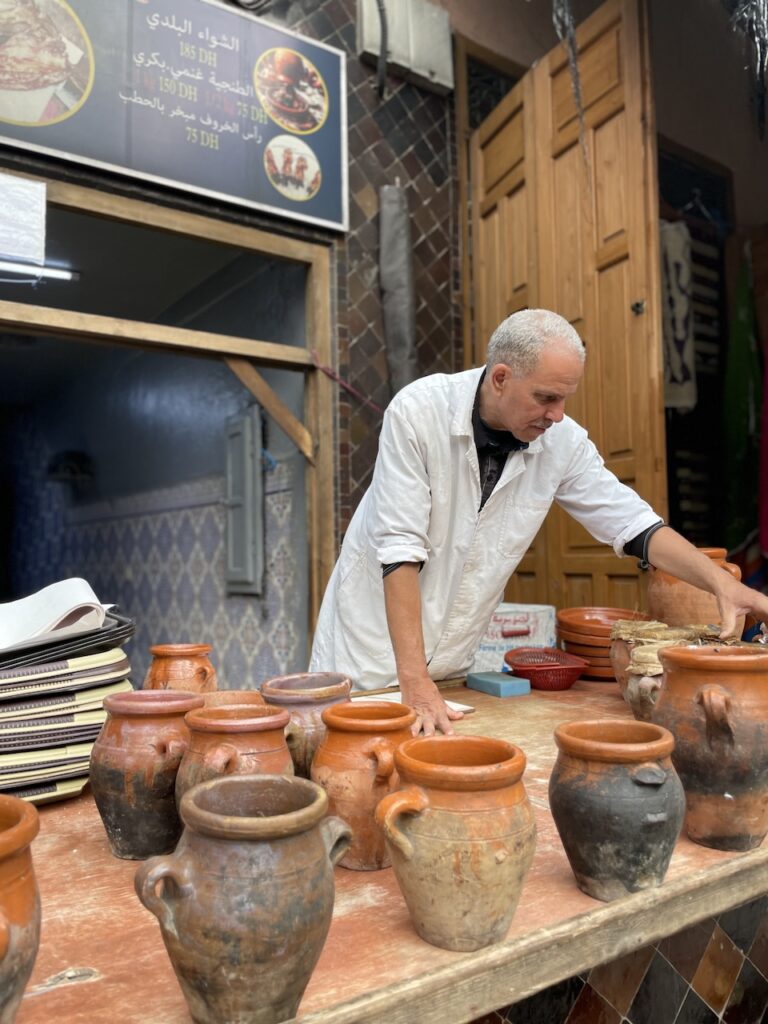
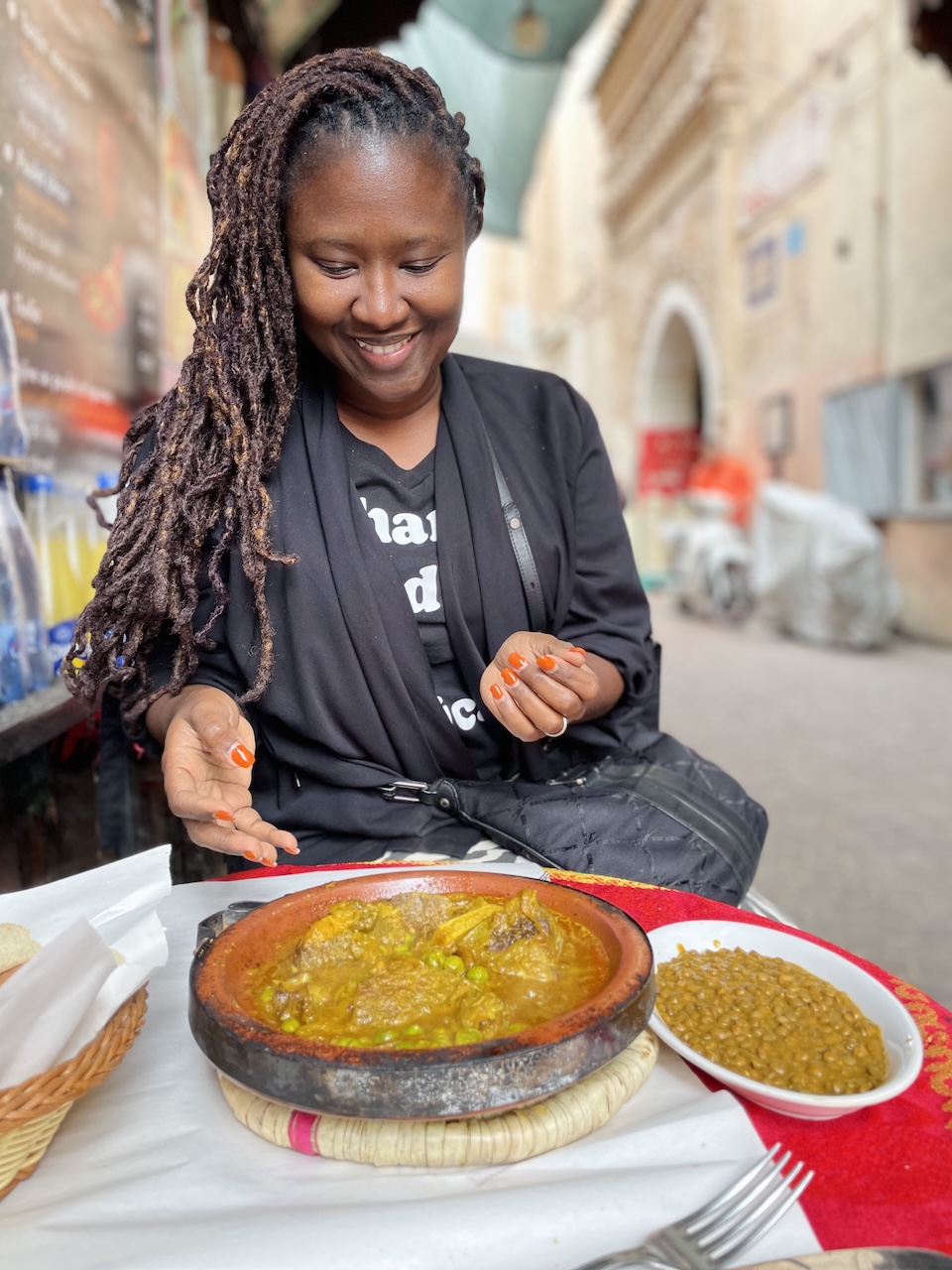
Tangia is one of Marrakech’s most iconic dishes — slow-cooked lamb or beef, traditionally prepared in a clay pot. It’s a dish usually made by men, and there are two things that make it truly special. First, the mix of spices and aromatics: saffron, preserved lemons, smen (fermented butter), cumin, olive oil, garlic… a beautiful mix of flavors that tells you everything you need to know about Moroccan cuisine.
And second, where it’s cooked. Tangia isn’t made in restaurant kitchens. It’s cooked underground, in the furnaces that heat water for the hammams. The result? Meat so tender it falls apart, bursting with flavor and depth.
Then came Mechoui — roasted lamb cooked right under your feet. Literally. In the alley, if you ask nicely, they’ll even lift the lid of the earthen oven so you can take a peek. Unlike Tangia, Mechoui is as simple as it gets. No fancy spices during cooking. Once ready, it’s served with bread, salt, and cumin. That’s all you need. Crispy skin, tender meat — the perfect duo to start off a food tour in style.
Second Stop: Let’s Taste Some Olives, shall We?
Now, let me confess something… I’ve never really been a fan of olives. I know, I know — how can a foodie say that, right? But it’s true.
Yet, somehow, Morocco changed my mind.
There’s something about standing in front of those vibrant olive stalls — the mix of colors, the variety of shapes and marinades — that makes you want to give them a second chance. Green, black, even pink! Each one has its own personality. Some spicy, others salty or citrusy, all bursting with flavor.
The vendors proudly offer samples as if they’re sharing small treasures, and honestly, they are. Some olives are marinated with harissa for a fiery kick, others soaked in lemon or herbs. I found myself reaching for more, surprised at how much I was enjoying them.
3rd Stop: Spices & Argan Oil
Our next stop wasn’t exactly about eating, but it was definitely full of flavor. We made a quick pause in a small shop for a short session on Moroccan spices and argan oil — and honestly, I learned a lot.
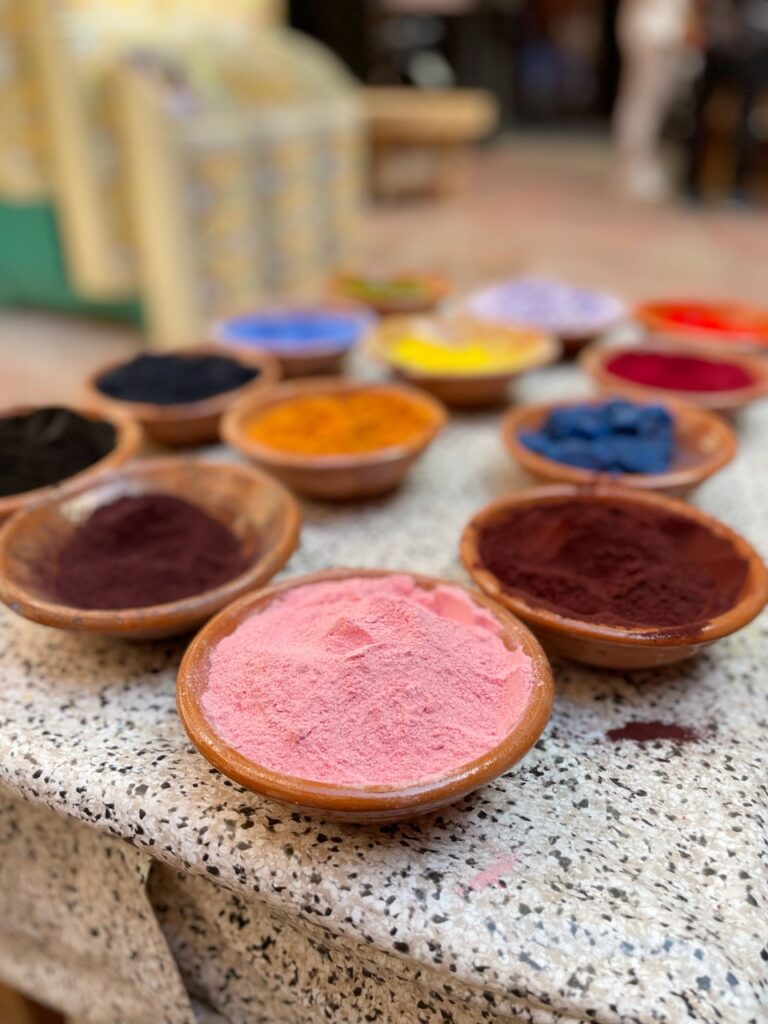
We often hear about argan oil in beauty routines, but I was pleasantly surprised to discover that in Morocco, it’s also used for cooking. I loved it so much that we went back the next day to buy some to bring home to Côte d’Ivoire.
Since that trip, there’s always been a bottle of culinary argan oil in my kitchen — a little taste of Morocco that found its place in my foodie life. And fun fact: every time someone I know travels to Morocco, there’s usually a small bottle tucked in their suitcase for me.
4th Stop: Harira
Still buzzing from our spices and argan oil session, we made a quick — but oh-so-delicious — stop for harira.
This traditional Moroccan soup is made with tomato, lentils, chickpeas, and fresh herbs, among other ingredients. Honestly, I couldn’t remember them all — I was too busy savoring each warm, comforting spoonful. There’s something about a bowl of soup in the middle of a bustling market that just hits differently.
Harira is eaten all year round — for breakfast, as an appetizer, or even as a main dish. But I was told it’s especially common during Ramadan.
5th Stop: Kefta Sardines — Sardine Meatball Sandwiches
It was well after our trip to Marrakech that I finally got around to watching one of my current favorite travel shows on Netflix: Somebody Feed Phil.
I was excited to see this very stop featured on the show! During the episode, the owner of Moroccan Food Adventures shared with Phil that sardines are one of the most popular fish in Morocco.
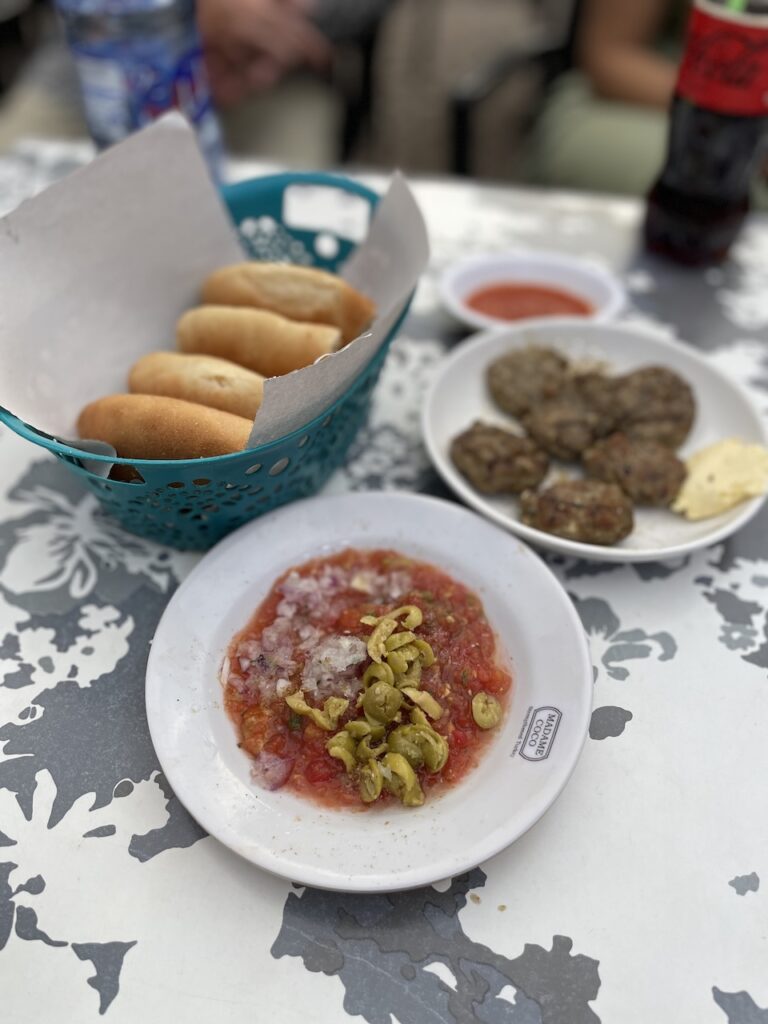
So yes, this stop was all about sardines — or, more precisely, “hout quari”: sardine kefta sandwiches, which are an absolute must-try. The sardines are mashed into a paste, shaped into small balls, then grilled or fried before being tucked into a sandwich. Topped with onions, tomato sauce, harissa, green olives, and a hint of smen, each bite is a punch of flavor that makes you wonder why you hadn’t tried it sooner.
6th Stop: Svenj — Moroccan Donuts
Next up: Svenj (or Sfenj) — Moroccan doughnuts that are impossible not to love. Made from a sticky, unsweetened leavened dough, the batter is shaped into rings and deep-fried until golden and crispy on the outside, yet soft and chewy on the inside.
You can dust them with sugar, or enjoy them as is — I went both ways, of course. Honestly, this stop quickly became one of my favorites on the tour. There’s something about biting into a warm sfenj straight from the fryer that just makes you smile.
7th Stop: Cucumber Soup
I can’t remember the name of this cold soup, but I’ll never forget how fresh and refreshing it was. This is another dish I’m 300% sure I wouldn’t have tried if it weren’t for Moroccan Food Adventures’ well-thought-out itinerary.
The soups were blended right when we arrived and although this wasn’t one of my absolute favorites — definitely not up there with the sfenj or the tangia — it was a lovely chance to sit down, rest a little, and get to know our group.
8th Stop: Visit to a Communal Bakery
Before starting this culinary adventure with Moroccan Food Adventures, I had noticed this type of bread everywhere in the Medina.
Called Khobz, Moroccan flatbread comes in round shapes and is made from white or wholewheat flour with a thick, crusty exterior and soft, chewy interior. It’s served at nearly every meal and often doubles as a utensil to scoop up salads, tagines, tangia, or other Moroccan dishes.
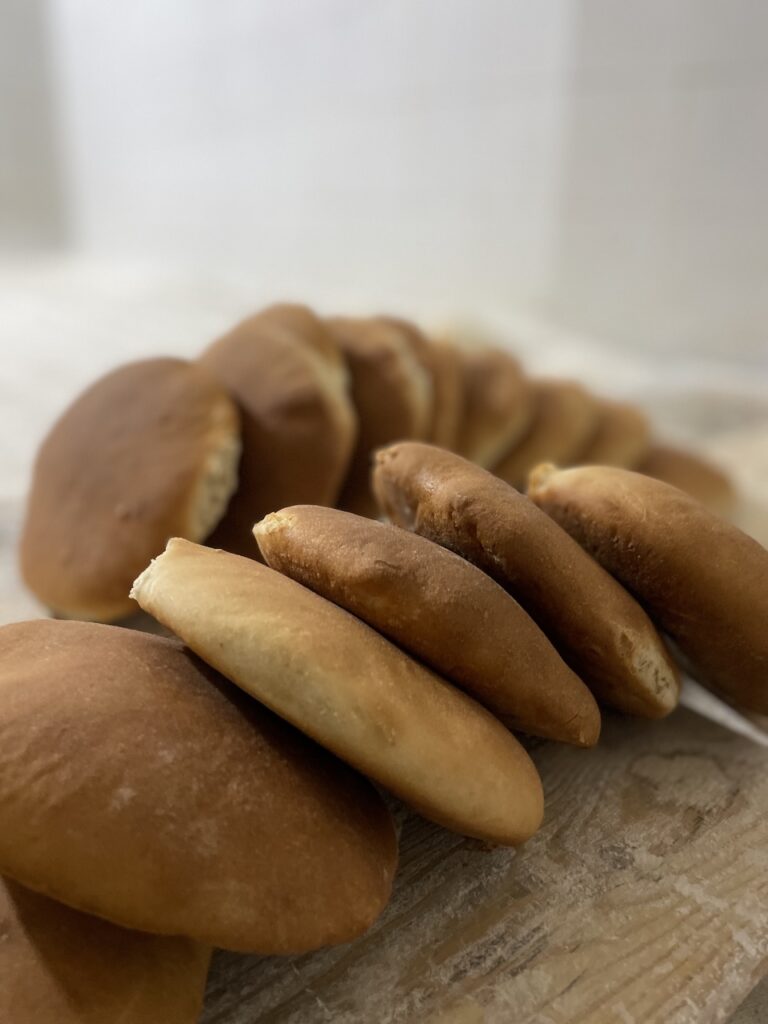
During our tour, we learned something fascinating: many families don’t have the special ovens needed to bake this bread at home, so they bring their dough to communal bakeries — hence the name. Watching the bakers at work, shaping the dough and sliding it into the ovens, felt like peeking into the heartbeat of local life.
9th Stop: Babbouche — Snail Soup
Next up was Babbouche, a slow-cooked snail soup simmered gently over low heat. It’s made with more than a dozen spices, which infuse not only the snails but the broth itself with a rich, aromatic flavor.
I’ll be honest — this was my least favorite stop on the tour. But I was determined to try it and taste this local delicacy, which is deeply appreciated by Moroccans. Sometimes, being a foodie is about stepping out of your comfort zone… and this was definitely one of those moments.
10th Stop: Vegan Couscous
What would a Moroccan food tour be without couscous, you might ask? Of course, I had eaten couscous before, but there’s a difference between having it anywhere and enjoying it in the heart of Marrakech — let alone a vegan version, which I had never tried before!
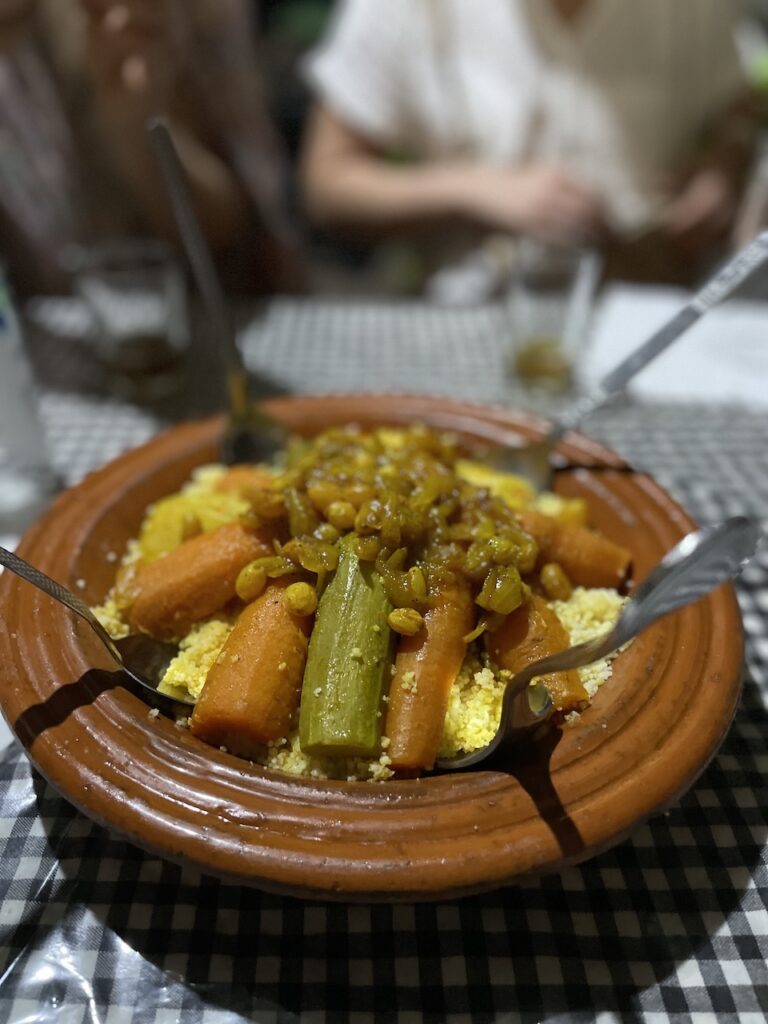
Piled high with fresh vegetables and caramelized onions, this authentic meal was prepared by one of the most popular Marrakchi mamas in that part of the Medina. Even though we were already pretty stuffed from the tour, we simply couldn’t resist this beautiful, aromatic meal set in front of us.
11th Stop: Traditional Pastries
Ending on a sweet note? Yes, please and thank you!
I can’t remember all the names of the pastries we tried for dessert, but I’ll never forget how sweet, nutty, and rich they were, made with almonds, honey, and some surprisingly interesting flavor combinations. Each bite felt like a little celebration of Moroccan desserts.
To wash it all down, we had two small smoothies — one even blended with avocado. A refreshing, slightly creamy finish to an unforgettable food tour.
This evening street food tour with Moroccan Food Adventures was a true feast for the senses — and I honestly can’t recommend it enough.
Back when we visited in 2023, the tour cost $70 USD per person; it’s now $73.50 USD for adults. Depending on when you’re reading this, I recommend double-checking their website for the most up-to-date information.
One of their most popular activities, the tour lasts about 3.5 hours and requires a booking for a minimum of 2 people. You can find all the details and book your spot here: https://marrakech.moroccanfoodadventures.com/
So… are you ready to experience an authentic Taste of Marrakech for yourself?